
Loose Skin After Ozempic or Mounjaro: Can Surgery Help?

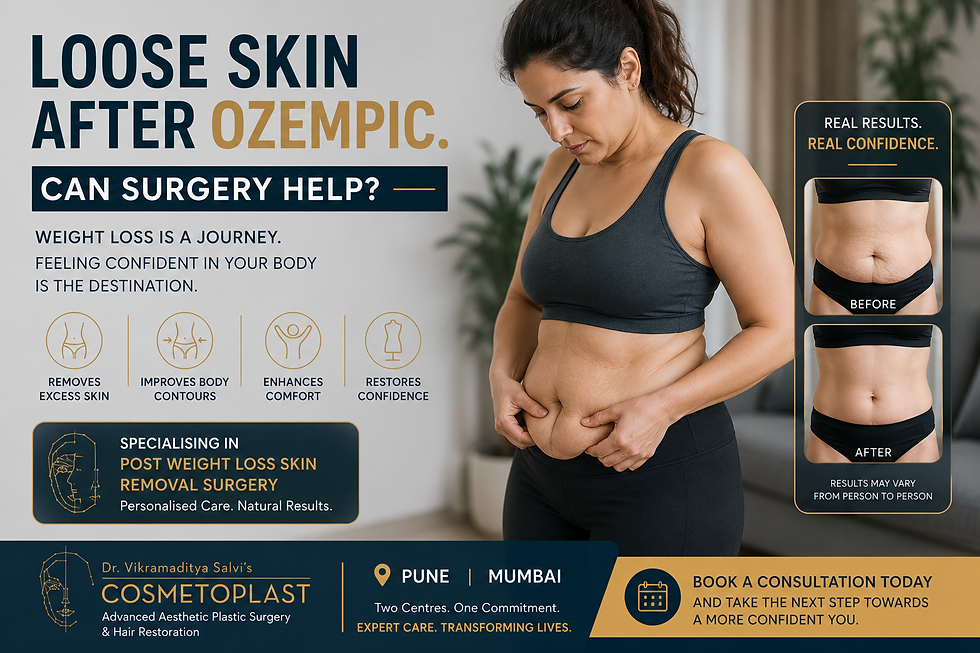
Loose Skin After Ozempic or Mounjaro: Can Surgery Help?
Ozempic has changed the way we think about weight loss.
For many people struggling with obesity, medications such as Ozempic (semaglutide) have made it possible to lose 15, 20, 30 kilograms or even more without undergoing bariatric surgery.
Patients often tell me that, for the first time in years, they feel healthier, more energetic and more confident.
Then comes the next surprise.
Instead of worrying about excess weight, they find themselves asking:
"I've lost the weight... but what do I do with all this loose skin?"
It's a question I'm hearing more often every year.
The good news is that there are effective solutions. The first step is understanding why it happens.
Why Does Ozempic Cause Loose Skin?
The simple answer is:
Ozempic doesn't cause loose skin. Weight loss does.
When your body carries excess weight for many years, the skin stretches to accommodate the increased volume.
Skin contains collagen and elastin, which give it strength and elasticity.
Over time, these fibres become stretched beyond their ability to fully recoil.
When significant weight is lost, the fat disappears much faster than the skin can shrink.
The result is excess folds of skin rather than excess fat.
Why Does It Seem More Common With Ozempic?
Several reasons explain why more people are noticing loose skin after GLP-1 medications.
1. People are losing more weight
Many patients now lose amounts of weight that previously required bariatric surgery.
The greater the weight loss, the more likely loose skin becomes.
2. Weight loss often happens faster
Rapid changes in body volume may leave the skin with less time to adapt.
3. More people are reaching healthier weights
Previously, many patients never lost enough weight to reveal the true amount of stretched skin.
Now they are.
Which Areas Are Most Common?
The abdomen is usually the biggest concern, but many patients notice loose skin in several areas.
Common areas include:
Lower abdomen
Upper abdomen
Arms
Inner thighs
Buttocks
Breasts
Back
Neck
Face
Each area may require a different treatment approach.
Can Loose Skin Tighten Naturally?
Sometimes.
Small amounts of loose skin often improve over several months, especially in:
younger patients
patients with good skin quality
moderate weight loss
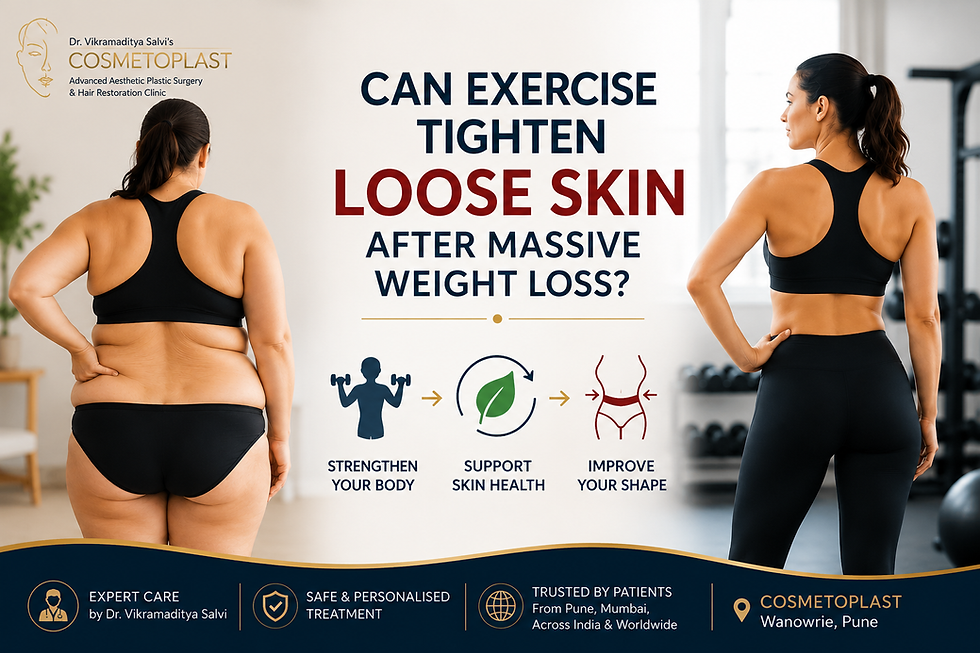
However, once large folds of skin develop, exercise, creams and supplements generally cannot remove the excess skin.
Building muscle can improve body shape, but it cannot eliminate stretched skin.
How Long Should You Wait Before Surgery?
One of the biggest mistakes is considering surgery while you're still actively losing weight.
Your body is still changing.
If surgery is performed too early and you continue losing significant weight afterwards, additional loose skin may develop.
Most plastic surgeons recommend:
reaching your goal weight
maintaining a stable weight for approximately 3 to 6 months
ensuring your nutrition is optimised
confirming that no major further weight loss is expected
What Operations Can Help?
Treatment depends entirely on the areas affected.
Common procedures include:
Tummy Tuck (Abdominoplasty)
Removes excess abdominal skin while tightening the abdominal wall when appropriate.
Ideal for patients whose main concern is the lower abdomen.
Circumferential Body Lift
Suitable for patients who have lost massive amounts of weight.
Treats loose skin around the abdomen, flanks, lower back and buttocks.
Arm Lift (Brachioplasty)
Removes hanging skin from the upper arms.
Thigh Lift
Improves contour of the inner or outer thighs.
Breast Lift
Restores breast shape after significant weight loss.
Sometimes this is combined with implants or fat grafting depending on the patient's goals.
Combination Procedures
Many patients require more than one procedure.
A personalised surgical plan is usually safer and provides more balanced results than treating each area in isolation.
Can Liposuction Fix Loose Skin?
This is one of the most common misconceptions.
Liposuction removes fat.
It does not remove excess skin.
In fact, liposuction alone may make skin laxity appear more obvious if significant loose skin is already present.
Am I a Good Candidate?
You may be a good candidate if:
✔ You've reached a stable weight.
✔ Your weight has remained stable for several months.
✔ You no longer expect major weight loss.
✔ Loose skin causes discomfort or affects your confidence.
✔ You are medically fit for surgery.
What About "Ozempic Face"?
You may have heard the term "Ozempic Face."
This describes facial volume loss that can occur after significant weight reduction.
It is not caused by the medication itself.
It happens because facial fat decreases along with body fat.
Treatment varies depending on the individual and may include fat grafting, fillers, skin tightening procedures or facelift surgery in selected patients.
Frequently Asked Questions
Does Ozempic permanently damage the skin?
No. Ozempic does not damage your skin. Loose skin results from major weight loss and the skin's limited ability to retract after being stretched.
Will collagen supplements tighten loose skin?
Collagen supplements may support general skin health, but they are unlikely to remove significant excess skin after massive weight loss.
Should I stop Ozempic before surgery?
Your plastic surgeon and the doctor managing your weight-loss medication will advise you. Some GLP-1 medications may need to be paused before surgery because they slow stomach emptying, and the exact timing depends on the medication, dose and the planned anaesthetic.
Can I continue losing weight after skin removal surgery?
Minor fluctuations are common, but significant additional weight loss after surgery may create new loose skin and affect your final result.
Final Thoughts
Ozempic has helped thousands of people achieve something that once felt impossible: meaningful, sustained weight loss.
For many, the final challenge isn't the weight itself but the loose skin that's left behind.
The important thing to remember is that this isn't a sign of failure. In many ways, it's evidence of success.
Once your weight has stabilised, body contouring surgery can address excess skin, improve comfort, restore body proportions and help your appearance reflect the remarkable progress you've already made. About the Author
Dr. Vikramaditya Salvi
M.Ch. Plastic Surgery | Cosmetic, Plastic & Reconstructive Surgeon
Dr. Vikramaditya Salvi is a board-certified Plastic, Cosmetic and Reconstructive Surgeon and the Founder of Cosmetoplast – Advanced Aesthetic Plastic Surgery & Hair Restoration Clinics in Pune and Mumbai.
He has extensive experience in post-weight-loss body contouring and skin removal surgery, helping patients who have achieved significant weight loss through lifestyle changes, bariatric surgery, or GLP-1 medications such as Ozempic®, Wegovy®, Mounjaro® and tirzepatide.
His practice focuses on personalised surgical planning to address excess skin after massive weight loss, including:
Circumferential Body Lift
Lower Body Lift
Tummy Tuck (Abdominoplasty)
Fleur-de-lis Abdominoplasty
Arm Lift (Brachioplasty)
Thigh Lift
Breast Lift after Weight Loss
Mommy Makeover
Comprehensive Post-Bariatric Body Contouring
Dr. Salvi consults patients at Cosmetoplast clinics in Pune and Mumbai, where he provides customised treatment plans designed to improve comfort, function, body proportions and long-term confidence following major weight loss.
Clinic Locations📍 Pune
Cosmetoplast – Advanced Aesthetic Plastic Surgery & Hair Restoration Loose Skin After Ozempic or Mounjaro: Can Surgery Help?


Comments